How Low Can You Go? New greener synthesis of barium sulfide
Publish date:
We’re pleased to announce our latest publication in RSC Advances, led by PhD student Will Tetlow in collaboration with Dr. Giulia Longo at Universitat Politècnica de València.
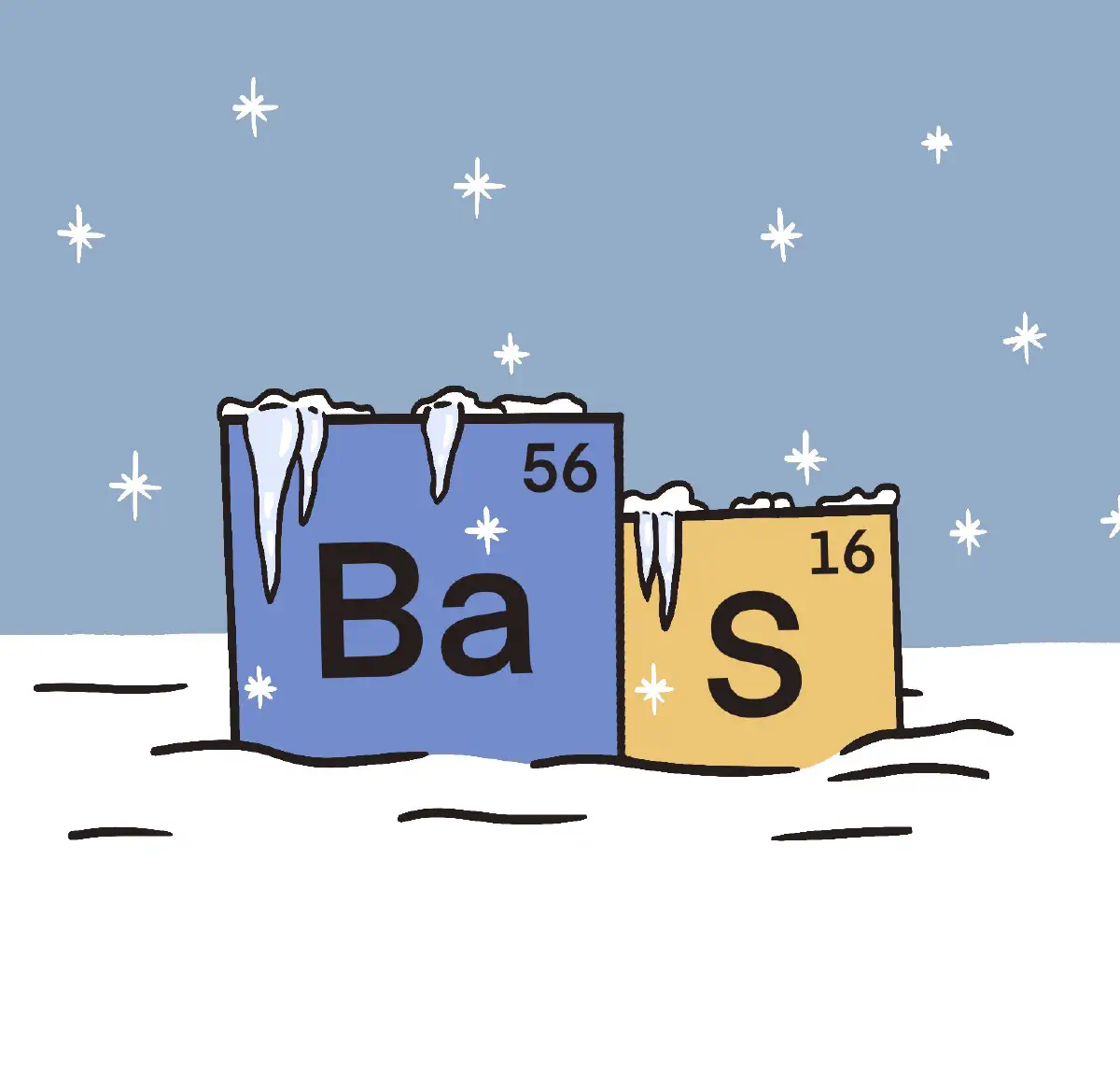
Barium sulfide (BaS) is a critical precursor for emerging technologies like the perovskite photovoltaic absorber BaZrS₃, but conventional production methods require extreme temperatures (>1000°C) and generate substantial CO₂ and SO₂ emissions—a significant environmental concern.
Will developed an innovative solid-state synthesis that dramatically reduces both temperature and environmental impact. By combining mechanochemical ball milling with a carefully controlled low-pressure thermal environment, we achieved 90% conversion to high-purity BaS at just 500°C—a remarkable 500°C reduction from literature methods.
The key breakthrough lies in leveraging Le Chatelier’s principle through precise gas flow control in custom-designed graphite vessels. This maintains optimal sulfur pressure while continuously removing water vapour, driving efficient BaS formation at unprecedented low temperatures. Real-time residual gas analysis confirmed that emissions are now 91% water vapour, compared to the CO₂/SO₂-dominated output of traditional routes. This work opens exciting possibilities for sustainable production of chalcogenide materials and accelerating next-generation photovoltaic technologies.
Read the Paper
Tetlow, W.D., Hutter, O.S., Etherington, M.K., Longo, G. RSC Advances, 15, 50446-50456, 2025 DOI: 10.1039/D5RA07445B